
AI safety has a lot of people who are great at thinking about ideas. We need more people who are great at thinking about people and projects.
Generator is a three-month residency where residents pitch, build, and ship projects, work with mentors from across the AI safety ecosystem, and get support landing full-time roles at the organizations that need them. If you've been looking for a way into AI safety that isn't to become a researcher, this is it.
Applications for the winter 2027 round close at the end of the day on November 1, 2026, Anywhere on Earth (AoE). Apply here. All international applicants are strongly encouraged to apply by October 26, 2026, to allow time for visa processing.
Generator was an unbelievable experience for me. It was an opportunity to be embedded in THE AI safety hub, build great relationships, build more AIS context and better models of the space, and have an opportunity to contribute impactful work while de-risking myself as a candidate. This was exactly the type of thing I needed to shift my career into AI safety work, and the generalist nature of the program really suited my skillset and experience.
I can't imagine a better way to speedrun context and connections in this fast-moving field. I'm a “mid-career professional” from another field and didn't really know what to expect, but pretty quickly came to the conclusion that I would do anything to keep working in this building with these people. I have never felt more motivated to go to work every day. A “career in AI safety” wasn't very legible to me before, or I didn't have a concrete idea of what that would look like or what on-ramps were available to me, and now I feel swamped with compelling projects to work on and opportunities. Truly a life-changing experience.
Generator brought together a very rare combination of thoughtful, highly agentic people who care about AI risk. This may be the best opportunity for people interested in field-building for AI safety.
The past few months I've spent in Berkeley have been the most exciting and fulfilling of my life. Every conversation I've had during Generator has helped me learn more about AI safety and what the field needs to scale and succeed. I feel incredibly grateful to have had the flexibility to stress-test my ideas with other residents and work with advisors who've given me so many opportunities to execute. I came in doing technical research and discovered that generalist work is where I really fit!
The Generator Residency helped me quickly develop a strategic understanding of what needs to be done next in the AI safety nonprofit landscape, as well as the resources and networks to execute that vision. My personal development benefited greatly from the mentorship, flexibility, and proximity to ideas at the policy and technological frontier that the program provided.
Generator puts you right at the heart of the AI safety ecosystem and gives you a problem-solver badge that everyone recognizes. You'll have the chance to contribute a lot, and people will expect you to. If you're mission-driven and thrive in a fast-paced environment, you'll love it. It's hard, fulfilling work, and the ecosystem is eager for more generators!
Agentic executors who care deeply about AI safety.
We're looking for people who can identify gaps in the AI safety landscape and fill them, who are mission-driven, comfortable with ambiguity and flexibility, and are willing to do whatever work needs to get done to accomplish their goal.
We are excited about applicants from a range of professional backgrounds, including early- and mid-career, and a range of skillsets such as operations, communications, policy, engineering, computer science, and more. What matters most is a track record of execution and genuine commitment to making sure transformative AI goes well for humanity.
Previous projects
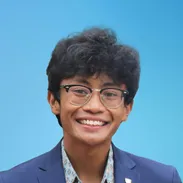
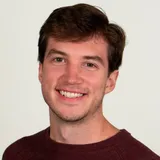
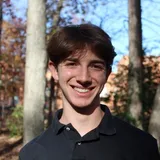
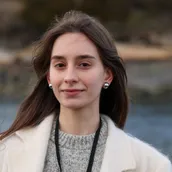
Some highlighted projects led by previous residents during the first round of Generator.
Advisors
Residents are mentored by experienced generalists from across the AI safety ecosystem. Advisors for the winter 2027 round include:


Advisors from our first cohort, in summer 2026, included:


Two tracks
Scope and lead a project
Residents on the Self-Directed track spend the program starting a new project, sometimes in collaboration with other residents. This track suits people who have a strong vision for their project and expect to learn the most from executing a larger project end-to-end. Residents will spend the first few weeks scoping various ideas before settling on a project. This track can also be a path to founding a new organization.
Examples from the first cohort:
- Praxis, a weekend retreat in Berkeley that brought top debaters together with the experts working to keep AI from endangering humanity.
- Longitude, an intensive that brings technical AI safety experts to DC to explore careers in policy.
- Talent Commons, a cross-organization talent directory for the AI safety ecosystem, now piloting with MATS, Constellation, and Kairos programs. It helps hiring managers find the most promising people coming out of every AI safety program and hiring round.
Pair with an organization
Residents on the Embedded track join an AI safety organization or work closely with a mentor for the residency, pursuing work that the mentor or organization scopes. This track suits people who want to absorb a mentor's specialized skillset, learn a lot about working at an organization, or build especially strong relationships with a mentor or organization.
Examples from the first cohort:
- Several residents worked alongside Constellation staff to run events for the AI safety ecosystem, including lab engagement events.
- Two residents supported the launch of AI Futures Project's AI 2040: Plan A, revising the text and supplements and running the launch event logistics.
- One resident served as Chief of Staff to Jeff Alstott as he started a new organization, running its recruiting and fundraising.
The winter 2027 program
Berkeley, January 18 to April 9, 2027, with an extension for selected residents until early July.
Some examples of what you could buildWorkshops and conferences
Run an impactful domain-specific conference like ControlConf, or one that brings new talent into AI safety, like the Global Challenges Project. Focus on reaching high-leverage, new audiences, or covering emerging subfields of AI safety.
Shared compute fund
Scope a fund that can rapidly cover the compute needs of independent safety researchers. Model whether a full-on cluster is needed. Acquire compute, deliver a plan, and distribute a pilot round of grants.
Strategic awareness tools
Reduce adversarial pressure during takeoff by scaling AI-powered superforecasting and scenario planning in safety infrastructure. Build support among impactful stakeholders and run a pilot.
Your idea
These are examples. Residents get a fuller list of scoped ideas, and can also pitch their own projects to build capacity or infrastructure across the AI safety ecosystem.
Advising from experts in the field
Weekly meetings with successful AI safety generalists.
Constellation office access
Access to work from a premier AI safety coworking office, including meals on working days.
Project budgets
Generous funding to execute your project (e.g. venues, contractors, tools, travel).
Get paired with a mentor and a project or organization, meet the Constellation network, and build context on the field and its gaps.
Execute individually or in groups with generous budgets and mentorship from generalists across our partner organizations.
Land a full-time role at a serious AI safety organization or spin up a new organization. We aim to place the majority of residents seeking jobs within 12 months.
Selected residents continue their projects for another three months, funded and working in person at Constellation until late May.
Get paired with a mentor and a project or organization, meet the Constellation network, and build context on the field and its gaps.
Execute individually or in groups with generous budgets and mentorship from generalists across our partner organizations.
Land a full-time role at a serious AI safety organization or spin up a new organization. We aim to place the majority of residents seeking jobs within 12 months.
Selected residents continue their projects for another three months, funded and working in person at Constellation until late May.
Applications for the winter 2027 round close at the end of the day on November 1, 2026, Anywhere on Earth. Decisions go out by November 25.
Apply by November 1Team
The team running Generator, from Kairos and Constellation.


FAQ
Are applications open?
Yes. Applications for the winter 2027 round are open from October 12, 2026, until the end of the day on November 1, 2026, Anywhere on Earth (AoE).
When will I hear back about my application?
What is the application process?
Can I use AI to help write my application?
No. Every free-response answer must be written by you, without AI writing, rewriting, or polishing (including Grammarly-style tools and AI translation). Your answers are how we understand how you think, and we can and will reject applications with AI-written answers. You're not graded on prose, so short, rough answers in imperfect English are completely fine. You can still use AI for high-level feedback on your application.
There is one exception. If a disability makes it impossible or impractical to type your answers yourself and you write with assistive technology (for example, dictating and using AI to clean up the transcript), email us at contact [at] generatorresidency.org before you submit and we'll exempt you from this policy. The exemption covers getting your words into text, and the ideas in your answers must still be entirely your own.
What is the program timeline?
The core residency runs for 12 weeks, from January 18 to April 9, 2027. Residents spend the first few weeks building context and getting matched, and by mid-February every resident is paired with a mentor and a project or organization. The rest of the residency is project execution.
Selected residents are then invited into a three-month extension, in person at Constellation until late May and remote until early July 2027.
What happens after the core three months?
We help residents land a full-time role at an AI safety organization, spin their project into a new organization, or hand it off to one that can keep it going.
Selected residents are also invited into a three-month extension period to keep building, in person at the Constellation office until late May and remotely after that. Funding and office access continue for the in-person part of the extension.
Is there financial support?
Yes. Each resident receives a fellowship stipend of $8,500 per month. Some Embedded track residents may instead be employed during the residency, with a roughly equivalent gross salary in place of the stipend. Kairos also covers travel to and from Berkeley.
Residents invited into the extension period continue to receive the stipend while they take part in person, until late May.
Where is the program? Do I need to be in person?
Generator takes place at the Constellation office in Berkeley, California. Residents are expected to take part in person for the full core three months.
Residents invited into the extension period continue in person until late May, and remotely after that.
If you have a special circumstance, please apply anyway and let us know.
Am I eligible if I'm not a U.S. citizen?
Yes. We welcome applicants from anywhere in the world. For most international applicants, we'll be able to sponsor J-1 visas for the program's duration (though we can't guarantee obtaining such a visa).
If you're already in the US on a student visa (e.g., F-1), you may be able to participate through your existing work authorization. Reach out to us and we'll help figure out the best path.
Because visa processing takes time, we strongly encourage international applicants who will need sponsorship to apply early, ideally before October 26, so we can consider them for an early decision. We can still consider international applicants who apply after that.
How will I be matched with a project and advisor?
What kinds of roles does this opportunity lead to?
Generator is designed as a launchpad into full-time generalist roles in AI safety: program managers, fieldbuilders, operators, chiefs of staff, chief operating officers, and founders.
During and after the program we actively help residents land these roles, turn their projects into new organizations, or hand them off to existing ones.
Is this a research fellowship?
How can I refer someone?
Still have questions? Email us at contact [at] generatorresidency.org.